Physical Address
304 North Cardinal St.
Dorchester Center, MA 02124
Physical Address
304 North Cardinal St.
Dorchester Center, MA 02124

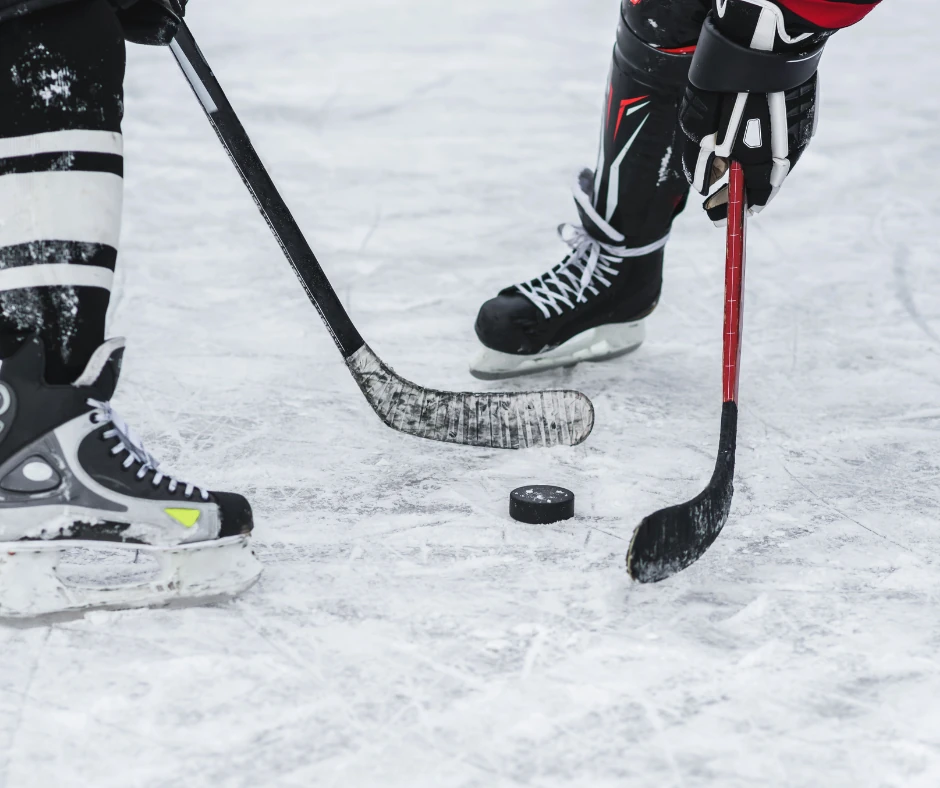
On 22 February 2026, in the dying minutes of the men’s hockey gold medal final in Milan, Jack Hughes took a high stick from Canada’s Sam Bennett to the mouth. He fractured his left front tooth completely, fractured the edge of his right front tooth, and had a tooth or two displaced out of position, along with damage to his lower teeth. He looked down at the ice, saw the remnants of his smile, and got back on the bench.
Then he scored the overtime winner.
Despite a bloody mouth and missing teeth, Hughes returned to the ice and beat Canadian goaltender Jordan Binnington in overtime, cementing his place in Olympic history. The photograph of him celebrating — gap-toothed, blood on his jersey, American flag around his shoulders — became one of the most shared sports images of the year.
It also put dental trauma squarely in the public eye. And for periodontists and oral surgeons, it raised a question worth answering properly: what actually happens, clinically, after an injury like this?
Hockey-related dental injuries are categorised differently from the everyday chips and cracks seen in general practice. The high-velocity nature of hockey injuries — sticks, pucks, skates — means they tend to be significant in terms of fractures, with considerable energy associated with each impact.
The resulting injuries fall into several categories. Crown fractures range from minor enamel chips to complete fractures exposing the pulp. Root fractures may not be immediately visible and require radiographic assessment. Luxation injuries — where the tooth is displaced but still partially attached — require repositioning and splinting. Avulsions, where the tooth is fully knocked out, carry the most complex treatment pathway and the shortest window for successful reimplantation.
In Hughes’s case, the clinical picture appeared to involve a combination: total crown fracture of the left central incisor, partial fracture of the right, displacement of additional teeth, and involvement of the lower dentition. This is a significant multi-tooth trauma event, not an isolated chip.
NHL teams have specialist dentists at every game, ready to triage and repair dental injuries so players can return to action as quickly as possible. At the professional level, immediate assessment covers soft tissue lacerations, identification of loose or displaced teeth, and stabilisation where needed.
For avulsed teeth, time is critical. Reimplantation within 30 minutes carries the best prognosis; beyond 60 minutes, the periodontal ligament cells on the root surface begin to die, substantially reducing the chance of successful reattachment. Storage medium matters too — Hank’s balanced salt solution is optimal, but milk is a viable emergency alternative. Dry storage is the worst outcome.
For fractured teeth with exposed pulp, emergency pulpotomy or pulp capping may be performed to manage sensitivity and preserve vitality pending definitive treatment. Displaced teeth are repositioned and splinted, typically for two to four weeks depending on the degree of luxation.
Hughes’s Devils team dentist, Jason Schepis, had in fact treated these same teeth before. In the 2023 playoffs, he had treated Hughes for a stick to the mouth that left his teeth snapped in half with nerves exposed. This was a repeat trauma event to previously restored dentition — a clinical scenario that complicates treatment planning considerably.
Once the acute phase is managed, the restorative decision-making begins. For young, active athletes, this is rarely straightforward.
Younger players at the beginning of their careers often opt not to pursue implants after tooth loss, since re-injury is likely. Many choose partial dentures instead, while others simply continue without replacement. This isn’t merely a cosmetic choice — it reflects a sensible clinical calculation. Implant placement in a site that may sustain further trauma introduces risk to the implant itself and to the surrounding bone. A provisional restoration preserves the space, maintains aesthetics, and keeps definitive options open.
For patients outside professional sport, the calculus is different. Where re-injury risk is low, implants remain the gold standard for replacing traumatically lost teeth. A titanium post placed into the jaw replicates the function of a natural root, prevents alveolar bone resorption at the site, and supports a permanent crown that is indistinguishable from the natural tooth. The osseointegration process — bone fusing to the implant surface — takes three to six months, after which the restoration is completed.
Bridges are a faster alternative but require preparation of adjacent healthy teeth and do not address the underlying bone loss that occurs when a root is absent. For anterior teeth in young patients, the long-term implications of this trade-off deserve careful discussion.
Every time a high-profile dental injury makes headlines, the same conversation follows. NHL players frequently sustain dental trauma from sticks, pucks, glass, and ice — with someone getting struck in the mouth feeling like a near-nightly occurrence at the professional level.
Mouthguards are not mandatory for NHL players, and many choose not to wear them. A reduction in facial injuries has been observed since visors were made mandatory, though dental trauma without facial laceration remains common. At the amateur and youth level, mouthguard mandates vary significantly — and this is where the clinical opportunity is greatest. The vast majority of sports-related dental injuries occur outside professional sport, in settings where protection is inconsistently enforced and access to specialist emergency care is limited.
A well-fitted custom mouthguard does not eliminate the risk of dental trauma but substantially reduces its severity. The difference between a fracture and an avulsion, or between a single tooth event and a multi-tooth trauma, is often determined by whether a mouthguard was in place.
Hughes confirmed to Jimmy Fallon that a toothless look was not his plan long-term, and he has since been restored. The clinical detail of his restorative treatment hasn’t been made public, which is as it should be. But the broader picture — immediate triage, provisional management, staged restoration — is standard for this injury type at any level of care.
The image of Hughes celebrating with a bloodied, broken smile will persist. What it illustrated, beyond the obvious toughness, was the clinical reality that dental trauma is abrupt, destructive, and consequential — and that the pathway back to full oral health is measured in months, not days.
