Physical Address
304 North Cardinal St.
Dorchester Center, MA 02124
Physical Address
304 North Cardinal St.
Dorchester Center, MA 02124

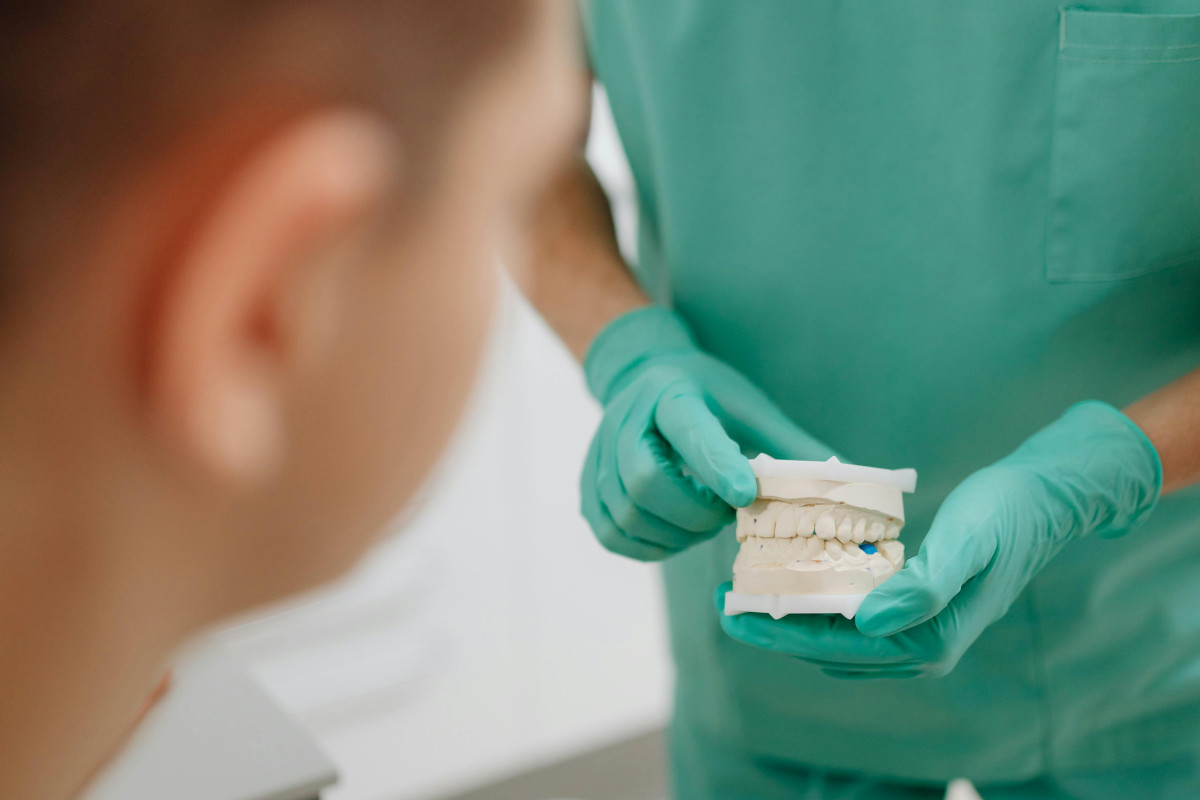
Of the 20 million teeth extracted in the United States every year, only around 5 million are replaced with dental implants. That gap — 15 million extraction sites left without a permanent tooth replacement — represents one of the most significant unmet needs in dentistry. The reasons patients decline implants are well documented: fear of surgery, particularly the drilling process; cost; the length and complexity of treatment; and limited access to specialist care.
These barriers highlight an urgent need for innovation to make dental implants safer, simpler, and more widely accessible. A California-based startup called iDentical believes it has built the answer — and the clinical data emerging from its first human studies suggests it may be right.
The concept is disarmingly simple: instead of drilling a cylindrical hole in the jawbone and inserting a standardised screw-form implant, iDentical scans the patient’s own extracted tooth, designs a titanium implant that precisely replicates its root geometry, prints it, and places it directly into the socket the tooth just vacated. No drilling. No osteotomy. No waiting months for bone to heal before placement. Just a custom-made implant, shaped like the tooth it is replacing, placed within days of extraction.
The iDentical process begins before the tooth is even removed. Optical impressions of the subject tooth, adjacent teeth, and opposing dentition are taken using an intraoral scanner prior to extraction. On the day of extraction, the extracted tooth itself is also scanned. CBCT imaging is used to construct a 3D model, with the subject tooth segmented from the scan data. The resultant models are then merged to design the implant.
The implant is manufactured using a metal powder bed fusion process — selective laser melting — from Grade 23 Titanium alloy, the same biocompatible material used in conventional implants. The lower portion of the implant features a lattice macro-surface with an average nominal depth ranging from 300 to 600 μm and a porosity of 50–70%, designed to encourage osseointegration. The coronal portion incorporates six circumferential micro-grooves, each 0.1mm deep. The implant is designed to fit precisely within the mesial-distal space of the extraction socket, with a slightly reduced buccal-lingual dimension to accommodate post-extraction socket changes.
The team has refined the process to require just six days from tooth extraction to delivery of a 3D-printed implant ready for insertion — though the feasibility study protocol allowed up to fourteen days. Once the implant arrives, placement is straightforward: within seven days of extraction, any dentist can place the iDentical implant into the existing bony socket site without drilling. A temporary crown is fitted immediately, out of occlusion, with the final restoration placed at three months.
The foundation of iDentical’s evidence base is a prospective feasibility study conducted at the University of São Paulo School of Dentistry in Brazil, published in the Journal of Clinical Periodontology in 2025. The study evaluated the safety and effectiveness of the novel drill-free, one-piece root-analogue implant in patients with non-restorable maxillary anterior or premolar teeth requiring extraction and implant placement, designed using a fully digital workflow and manufactured additively.
The headline outcome is striking: iDentical has completed its first-in-human clinical trial with 100% success after two years of follow-up. No implant failures. No serious adverse events related to the device. Osseointegration achieved across the cohort.
Supporting science from preclinical research adds further context. A comparative study published in Scientific Reports analysed 3D-printed root-analogue implants against conventional screw-form implants placed immediately after extraction in an animal model. Micro-CT analysis revealed statistically significant differences at two weeks in favour of 3D-printed implants over conventional ones in bone volume/tissue volume ratio, bone surface/bone volume, trabecular bone pattern factor, and structure model index — with mean bone-to-implant contact of the 3D-printed implants greater than that of conventional implants at two weeks. The early osseointegration advantage is biologically logical: a root-analogue implant fits the socket it occupies more precisely than a cylindrical screw ever can, leaving less void space and maintaining closer contact with the surrounding bone from day one.
One of the most compelling dimensions of iDentical’s first-in-human case is not the clinical outcome — it is the patient’s own account of the experience. The first patient to receive an iDentical implant had significant fear and anxiety about dental surgery. The entire process was performed without invasive drilling, reducing both surgical trauma and psychological stress. “The process of getting a dental implant scares me to death,” the patient said. “I am relieved to know that a less invasive implant procedure is now possible with iDentical.”
Dental anxiety is not a minor footnote to the implant access problem — it is one of its primary drivers. For a substantial proportion of the patients who decline implants despite needing them, it is not cost or convenience that is the deciding factor; it is fear of the drill, the bone, and the surgery. A procedure that eliminates drilling entirely — that takes an existing socket and fills it with something custom-made — is a fundamentally different psychological proposition for that patient.
The implications for treatment acceptance and public health are meaningful. If iDentical achieves FDA clearance and reaches general practice, it may not merely offer a different implant option — it may bring implant dentistry within reach of a patient population that has been systematically excluded by the perceived invasiveness of current techniques.
Beyond patient fear, iDentical addresses a second major access barrier: the concentration of implant dentistry in specialist settings. By simplifying the procedure and eliminating the need for drilling, iDentical opens the door for more general dentists to offer implants, broadening access and reducing bottlenecks in dental care delivery.
The conventional implant workflow demands surgical training, CBCT interpretation skills, guided surgery experience, and the equipment to match. These requirements effectively limit the procedure to periodontists, oral surgeons, and experienced implantologists. iDentical’s workflow, by contrast, requires an intraoral scanner, a standard extraction, and the ability to seat a pre-fabricated component into an existing socket — a skill set within reach of a well-trained general practitioner.
The company has refined the technology and process following the pilot study to further improve patient outcomes and accelerate turnaround time — a signal that the team is actively optimising for real-world general practice deployment rather than specialist-only adoption.
iDentical is currently progressing through the US FDA’s Investigational Device Exemption pathway — the regulatory route required before a novel implant device can be commercially sold in the United States. The company successfully placed the first iDentical implant in a live patient in the US as part of its pivotal IDE clinical study, in partnership with Dr Michael McGuire at Perio Health Professionals and The McGuire Institute in Houston — a significant regulatory and clinical milestone.
Following the initial phase with Dr McGuire, the company expects to expand to full enrolment at a minimum of four clinical sites across the US. A Series A1 funding round of $2 million is supporting the initial IDE cohort, with a larger Series A2 round of $10–15 million planned to complete the full study.
The company has also been awarded multiple patents covering its implant design and manufacturing process, and has received recognition from MedTech Innovator — one of the most competitive medtech accelerator programmes in the world — as well as the Bend Venture Conference growth stage award. Retired Dentsply Sirona President and COO Jim Mosch has joined the board, lending significant industry credibility to the commercialisation roadmap.
For periodontists and implant surgeons, iDentical represents both an opportunity and a question worth monitoring carefully. The opportunity is clear: a technology that reduces surgical invasiveness, preserves bone architecture, eliminates nerve injury risk from drilling, and expands the patient population able to accept implant treatment is a genuine clinical advance — if the long-term evidence holds.
The question is equally clear: two years of follow-up in a small feasibility cohort, while encouraging, is a slender evidence base for a device that diverges substantially from the established screw-form paradigm. Conventional implant systems have decades of long-term data. Root-analogue implants, despite their logical design rationale, are still accumulating theirs. Key questions remain about osseointegration predictability across varying bone densities, socket geometries, and systemic conditions; about long-term marginal bone stability; and about how the prosthetic interface performs over ten or twenty years.
These are not reasons to dismiss the technology — they are the appropriate questions to ask of any promising innovation before committing it to routine practice. The IDE study results, and the longer-term follow-up data that will follow, will be defining.
iDentical is the most clinically advanced embodiment of a broader trend. 3D printing technology has transformed various medical fields, particularly dentistry and orthopedics, with dental practitioners employing additive manufacturing for customised guides, prosthetics, orthodontics, endodontics, and oral surgery — with the emergence of 4D printing introducing smart materials capable of adapting to physiological changes post-implantation, paving the way for more sustainable and cost-effective healthcare practices.
The convergence of CBCT imaging, intraoral scanning, CAD/CAM design software, and metal additive manufacturing has made patient-specific implants feasible in ways that were impossible even a decade ago. iDentical is the sharpest current expression of that convergence — but it will not be alone for long. As the technology matures and evidence accumulates, root-analogue and patient-specific implant concepts are likely to proliferate across multiple manufacturers and clinical contexts.
iDentical is not yet commercially available, does not yet have FDA clearance, and its long-term evidence base is still being built. These are important caveats. But the concept it embodies — a personalised, drill-free implant placed directly into the natural extraction socket, accessible to any trained dentist, within days of tooth loss — addresses real and significant barriers to implant adoption in a way that the existing paradigm does not.
If the IDE study delivers the results the feasibility data suggests it might, the implications for access, patient experience, and the distribution of implant dentistry across general and specialist practice will be substantial. This is a technology worth watching closely — and understanding thoroughly before it arrives in the mainstream.
Sources: Romito GA et al. Early Placement of Patient-Specific One-Piece Drill-Free Fully Digital Designed Dental Implants: A Feasibility Study. Journal of Clinical Periodontology. 2025;52(10):1374–1385. DOI: 10.1111/jcpe.14204. MedTech Innovator, August 2025 (first-in-human case report); Inside Dentistry/Inside Dental Hygiene, 2025 (10 dental technologies); Fogarty Innovation, 2024 (iDentical company profile); iDENTICAL LinkedIn, 2025 (IDE study milestone); Scientific Reports, November 2023 (3D-printed vs conventional implant comparative study, micro-CT analysis); Journal of Mechanical Behavior of Biomedical Materials, March 2025 (3D/4D printing review).